
Tour Pey-Berland (Tower of Pey-Berland), Bordeaux
Flanking the Cathédrale Saint-André, this tower (and the square in which it sits) is named after the Archbishop Pey-Berland.
Discover and book the top Bordeaux sights
Flanking the Cathédrale Saint-André, this tower (and the square in which it sits) is named after the Archbishop Pey-Berland.

The monks originally lived just outside Saint-Emilion, but in 1338 they obtained permission from the Pope to establish a monastery within the walls. The cloister was built in the 14th-century.

The name comes from this churches location, It is situated between the banks of the river Garonne and the rue de Saint-Gervias.
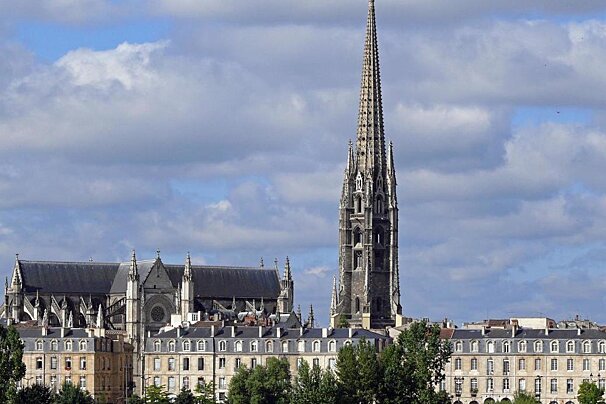
Imposing on the Place Canteloupe in Bordeaux, this Gothic church took over 200 years to construct from the 14th to the 16th century.

Founded in 1864 this stunning church was built in a Byzantine and Tuscan style and it houses one of the rarest statues of the Virgin of the Advent (the pregnant Virgin) in France.

The existing Roman Catholic church was built in the late 11th and early 12th century in a Romanesque style. However, it is thought that the original Benedictine church was built at the request of Clovis, the Merovingian King in the 5th century.

Gifted to Gaillard de la Mothe by his uncle Bertrand de Goth, Archbishop of Bordeaux, who later became Pope Clement V, the Cardinal Palace sits at the entrance to the city of Saint Emilion.

Situated close to the Port of Arcachon this beautiful church is in the heart of the old town and fishing village area.
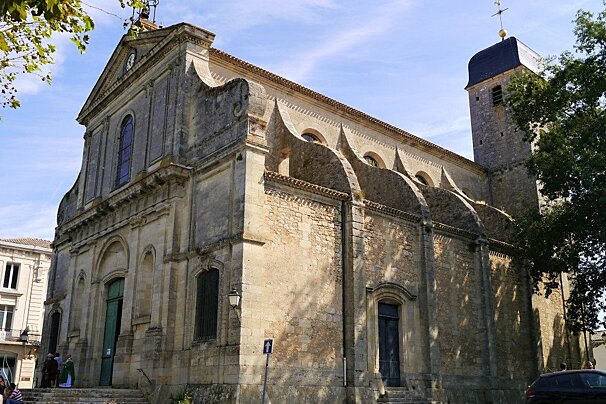
This impressive church was built in 1740 under the patronage of the Marchal of Turenne, count of Castillon, who had left money to the city in his will.

The Roman Catholic cathedral in Bordeaux was originally constructed in the 11th century, though little of this remains today.

The great wall, or Grandes Murailles, is now all that remains of a once Dominican monastery that was built in the 12th-century.

At 68 metres above the ground, looking down on the rooftops of the medieval town, take a deep breath and enjoy the 360° panoramic view of the most famous wine appellation.
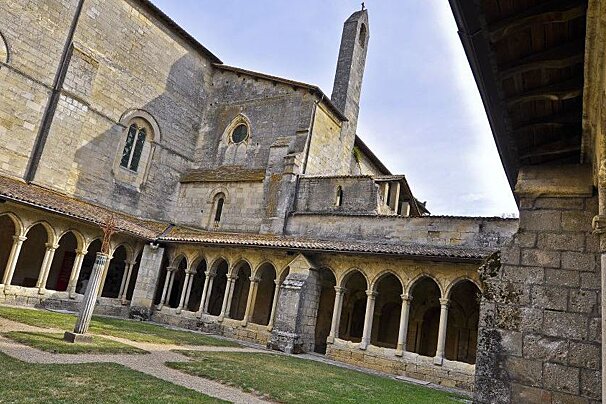
Built between the 12th & 15th centuries, this church is one of the largest in Gironde. It's design is both Romanesque and Gothic, showing how it has been remodelled and renovated throughout history.

Constructed between the 12th and 15th centuries this church was built with a dual purpose of being a priory and as well as a place of worship.

Known as the Abbaye de La Réole and the Prieuré des Bénédictines, it was abandoned by the monks in 1790 and today houses the administrative services of La Réole.

In 1863 Leo Lesca and his brother bought a large estate on the edge of Arcachon basin. When they returned from Algeria, they built a fabulous home, the "Villa Algerian" which was surrounded by a park with the most exotic flora.

Situated close to the central Place de la Republique this catholic church is a dominating feature in the town landscape.

This church, sited in the higher part of Saint-Emilion town, is incredible underground feat, carved out of the rock over three centuries.