Tomb of Henri Toulouse-Lautrec, Verdelais
The tomb of this important and colourful painter is located in the cemetery of the Baroque church in Verdelais.
Discover and book the top Bordeaux sights
The tomb of this important and colourful painter is located in the cemetery of the Baroque church in Verdelais.
Sitting on the stunning Place de la Bourse, the museum of customs is located in the former customs house and presents the history of the customs administration.
Located in the centre of Bordeaux, this museum features paintings and sculptures by some of the best European artists, from the Renaissance to the 20th century.
The beautiful estate and house of the domain Malagar inspired many pages of writing in some of Mauriac's most famous novels; Flesh and Blood, Destinies and The Knot of Vipers.
Owned by Baroness Philippine de Rothschild, this château produces some of the great Médocs.
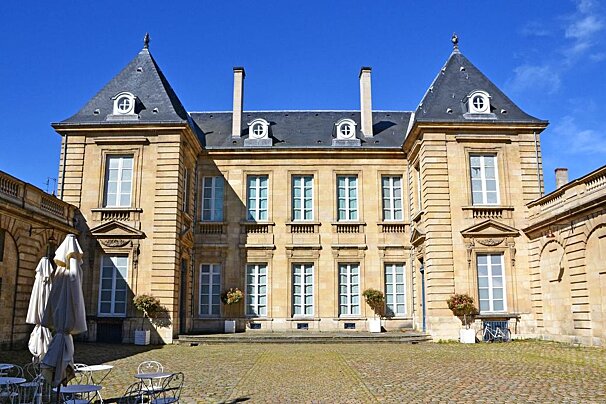
Housed in the 18th century Hôtel de Lalande, the museum of decorative arts has a collection of sculptures, ceramics, glass and silverware in its panelled rooms.
The association "Memorial de la Forteresse du Nord-Medoc" wants to remember to future generations the history of men during the Second World War, and the efforts of French forces to destroy this German fortress.
A great place to get to grips with the history and modern culture of the area in one hit. Well laid out and a great space for a family trip.
This small museum was established in 1975 by local people who wanted to preserve and remember their local heritage and the history of the Medoc / Bordeaux area.
This excellent museum recounts the history of Bordeaux and the Aquitaine region from prehistoric times through to the 20th century.
These limestone caves run under the town of Rauzan and feature an underground river which has had many uses over the last two centuries.
Situated a little inland on the peninsula to protect the building from erosion, it was placed there to monitor and protect the numerous vessels entering the basin from the strong ocean currents.
The monks originally lived just outside Saint-Emilion, but in 1338 they obtained permission from the Pope to establish a monastery within the walls. The cloister was built in the 14th-century.
Flanking the Cathédrale Saint-André, this tower (and the square in which it sits) is named after the Archbishop Pey-Berland.
The existing Roman Catholic church was built in the late 11th and early 12th century in a Romanesque style. However, it is thought that the original Benedictine church was built at the request of Clovis, the Merovingian King in the 5th century.
This church, sited in the higher part of Saint-Emilion town, is incredible underground feat, carved out of the rock over three centuries.
Sitting on the banks of the Garonne river, Place de la Bourse is an impressive classical French square which was built in the 18th century by the Gabriel family.
Travelling from the port at the very tip of the peninsula, at the opening of the Gironde estuary, La Pointe de Grave, the train travels down through Le Verdon and on to Soulac-sur-Mer.