Le Petit Train de Bordeaux, City of Bordeaux
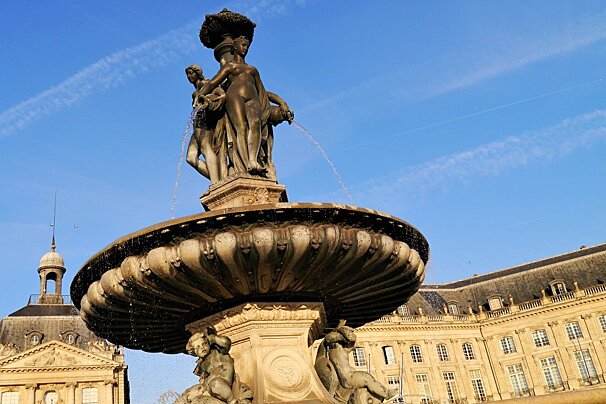
As it passes through the oldest parts of Bordeaux, making the most of the landscape, the train takes you past the most famous places and monuments of the city.

© Manoir de Gaboria
Located between Bordeaux, Saint-Emilion and Bergerac
Emilie and Florian are glad to welcome you in this manor of the 18th century, in cottages or guest rooms. This large and traditional stone building will charm you thanks to its high ceilings and exposed beams, its Gironde’s tiles and grand fireplaces.
Built on seven hectares of land with a dominant view, The Manor lives to the rhythm of the seasons, filled with lights and colours. A time of rest by the side of the south-facing swimming-pool in a flowering setting, will provide your stay with this sparkle of dream that will ensure the enjoyment of your holidays.
Located in the central part of the Manor, the four rooms retain all charm and sweetness of the Manor. Spacious rooms, exposed beams, refined decor and views of the park will combine to give you a moment of well-being.
As it passes through the oldest parts of Bordeaux, making the most of the landscape, the train takes you past the most famous places and monuments of the city.
Travelling from the port at the very tip of the peninsula, at the opening of the Gironde estuary, La Pointe de Grave, the train travels down through Le Verdon and on to Soulac-sur-Mer.
Whether it's your first time on a board or you've been surfing for years, So Nice Surf School will give you the guidance you need to get started or to improve your tricks in a cool, laid-back atmosphere.
Since 1983 Vedettes La Bohême welcome you to visit the Cordouan lighthouse or to discover the mouth of the estuary of the Gironde.
Take in Bordeaux’s historic landmarks and modern highlights on a hop-on hop-off double-decker bus tour with panoramic views and audio commentary for all ages.
The course, whose tree lined fairways are set in natural forests of maritime pines, mimosas, oaks and evergreen strawberry bushes, is hilly on the front nine and flatter over the back nine with several water hazards.
Situated in the luxurious surroundings of Le Grand Hotel de Bordeaux, this restaurant offers diners an elegant yet intimate restaurant styled in a palette of mauve and orange with a handcrafted marquetry floor.
This elegant and sophisticated two Michelin star restaurant offers creative dishes designed by chef Cédric Béchade, who plays with colours and textures in his cuisine.
Situated in a gorgeous white stone townhouse built in the classical style of the late 19th century, this restaurant is part of the joint project of Bernard Magrez, owner of various wineries in the Bordeaux area, and Pierre Gagnaire.
Chef Nicolas Masse offers in this restaurant a combination of traditional French cuisine, made with fresh seasonal ingredients from the southwest sourced from local producers, with unusual influences from all around the world. His creations can be paired with a large selection of wines, by the counsel of head sommelier Aurélien Farouil.
This restaurant serves traditional French cuisine in a very warm dining room dominated by an open fireplace in the centre. Open until late, they serve cocktails and usually have a DJ playing music.
This restaurant offers a reinvention of the traditional bistro recipes based on fresh, high-quality produce. They also have an ambitious selection of wines, all served in a warm, bohemian atmosphere.
This bar has an old-fashioned decoration that creates a very warm atmosphere. Their wine list includes many French references, as well as from other parts of the world. They can be enjoyed in their cosy interior or the patio, accompanied by selections of local delicatessen.
One of the best places to taste wines from the Bordeaux region. Located on the ground floor of the headquarters of the Conseil Interprofessionel du Vin de Bordeaux, the bar's team is very knowledgeable and passionate. They give tasting advice, extensive information on the grapes and suggestions for matching food and wine.
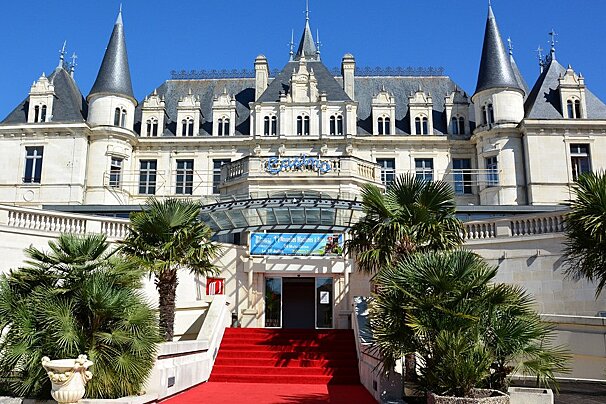
The beautiful building of Chateau Deganne was converted in 1904 into a casino. In the early twentieth century Paris and Bordeaux bourgeoisie came to spend the summer in Arcachon. Thus the town had to create distractions - a casino.
Centrally located, this bar offers a large selection of wines, especially French but also from other parts of the world. Customers can taste them through a self-service method, and they can be accompanied by regional delicatessen.
A diverse music programming that showcases some of the best local and national talent in jazz, music of the World, blues and many other expressions.
Situated at the foot of the historical Porte Cailhau, this bar has a list of more than 100 wines. They are focused on international products as well as some lesser-known wines from Bordeaux.
A small, peaceful and tranquil beach that is situated at the entrance to the marina and is the most sheltered of all the beaches around Arcachon due to its location within the basin.
An 800m strip of white sand situated between the Theirs and Eyrac piers this beach is very much in the Arcachon basin and sheltered from the strong Altlantic winds on the coast.
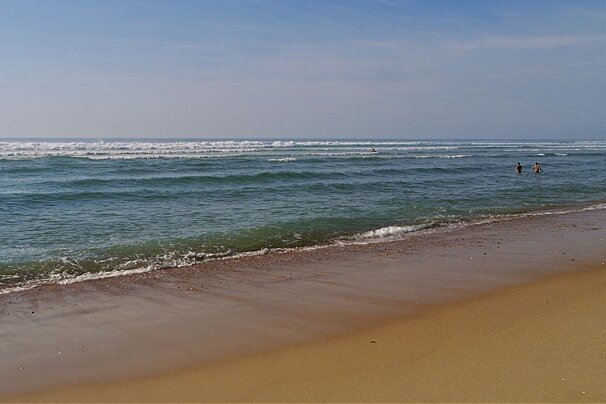
This is by far the largest and better known of the Arcachon beaches, stretching some 3km in length with wonderful views over to the chic town of Cap-Ferret and the peninsula beaches.
A wide walkway and promenade borders this beautiful beach. There are numerous things to do including games for children, surfing, beach volleyball and of course it's a great setting near the doors to the Atlantic ocean.
This area offers great views further down the west coast to the nature reserve of banc d'Arguin and the Great Dune of Pyla.
Belonging to the coastal dunes of Aquitaine, it's a single dune that is always moving and is in fact the tallest sand dune in Europe.
Known as the Abbaye de La Réole and the Prieuré des Bénédictines, it was abandoned by the monks in 1790 and today houses the administrative services of La Réole.
Situated close to the central Place de la Republique this catholic church is a dominating feature in the town landscape.
These limestone caves run under the town of Rauzan and feature an underground river which has had many uses over the last two centuries.
Constructed between the 12th and 15th centuries this church was built with a dual purpose of being a priory and as well as a place of worship.
The beautiful estate and house of the domain Malagar inspired many pages of writing in some of Mauriac's most famous novels; Flesh and Blood, Destinies and The Knot of Vipers.
The tomb of this important and colourful painter is located in the cemetery of the Baroque church in Verdelais.
This hilly town used to be the second largest in the region during medieval times, and it's home to the oldest town hall in France dating back to the 12th century.
It has the typical square layout around a central market square that is common with towns of that time and they still hold a market there on Tuesday mornings. It's a good example of a bastide town; these towns were established mainly as commercial centres, encouraged by incentives set down in a charter.
The pretty town of Saint-Macaire is a good base for seeing the area around Langon. It dates back to the 1st century AD and grew as a battlement town in the first half of the last millennium.
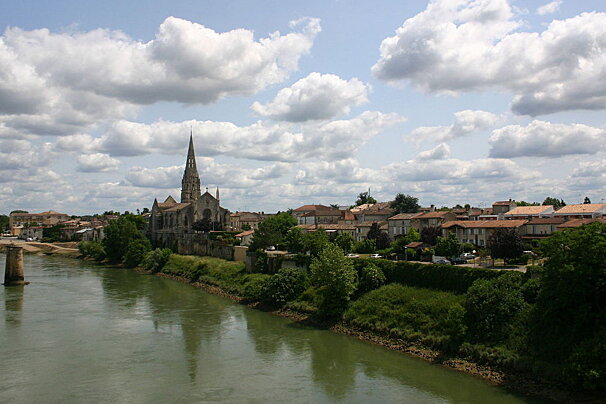
On the left bank of the Garonne, 50km inland, south east from Bordeaux, Langon is perfectly located for visiting the impressive Château de Roquetaillade and sampling the Sauternes wines to the east and the Entre-Deux-Mers wines to the north.
Sainte-Foy-la-Grande sits on the south bank of the Dordogne river. This attractive walled bastide town still has some of its medieval houses and is a good base for visiting the surrounding Sainte-Foy-Bordeaux wine region and nearby Château de Montaigne, home of Michel de Montaigne.
You get a sense of this town's history as soon as you arrive, with are flags and coats of arms lining the roads that lead you to the main square.